
Our Work
Focused residential marine construction on Marco Island.
Our work concentrates on three core disciplines of residential marine construction — docks, seawalls, and boat lifts — each planned and executed with long-term coastal performance in mind. Every project reflects decades of experience building on Marco Island, where shoreline conditions, material behavior, and structural demands require careful, site-specific judgment.
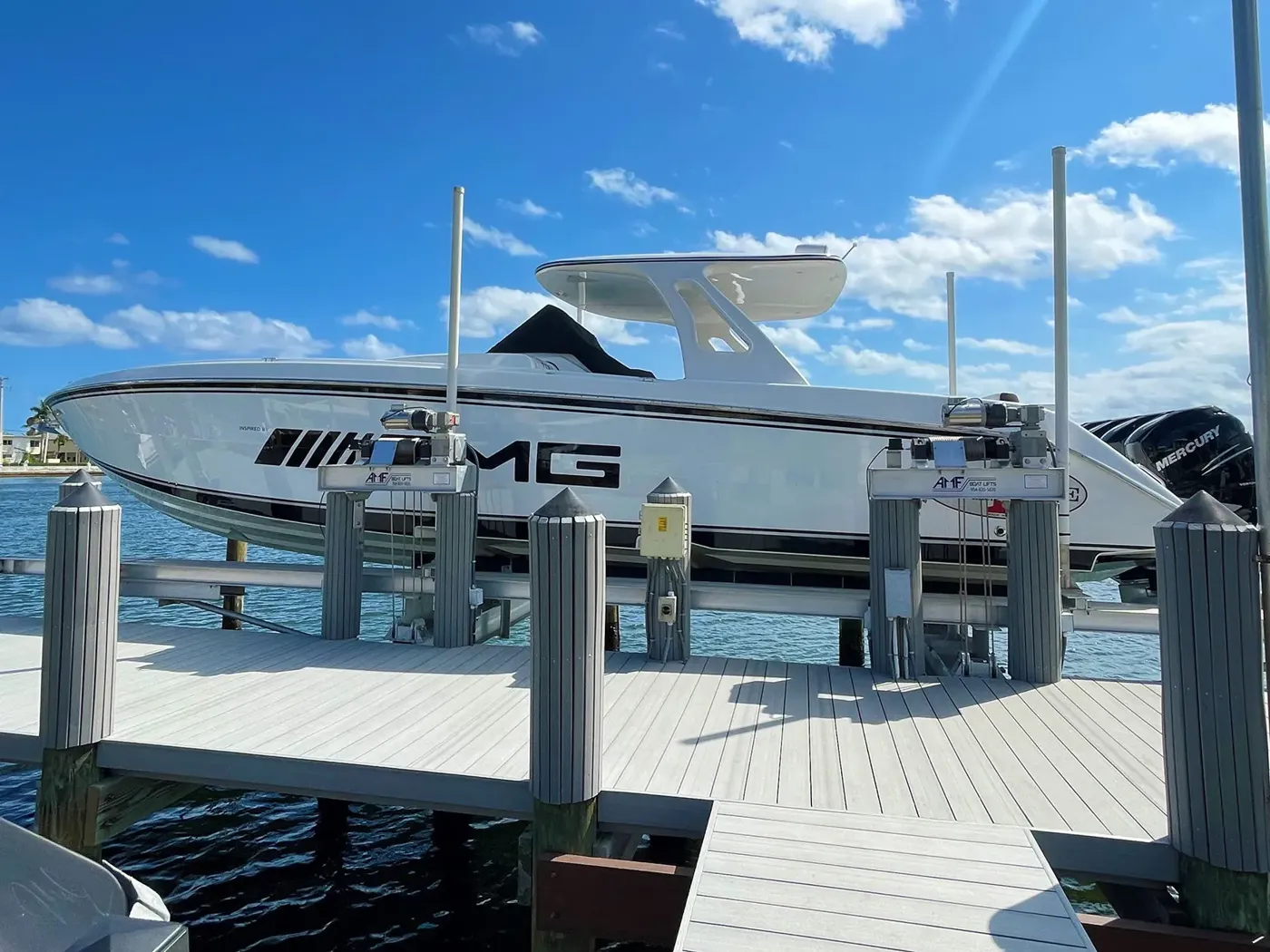
Residential Dock Construction
Docks
A dock is the primary interface between a waterfront property and the water. Its design must account for tidal movement, bottom composition, vessel requirements, and daily use patterns unique to the property.
Key Considerations
- Water depth and bottom conditions dictate pile type, spacing, and structural approach
- Vessel size and access frequency inform layout, finger pier placement, and fender systems
- Material selection balances longevity, maintenance requirements, and visual integration with the property
Performance & Longevity
A properly planned dock performs reliably for decades. We design for the specific environmental stresses of each site — salt exposure, wave action, and seasonal water level changes — so the structure maintains its integrity without premature intervention.
Learn More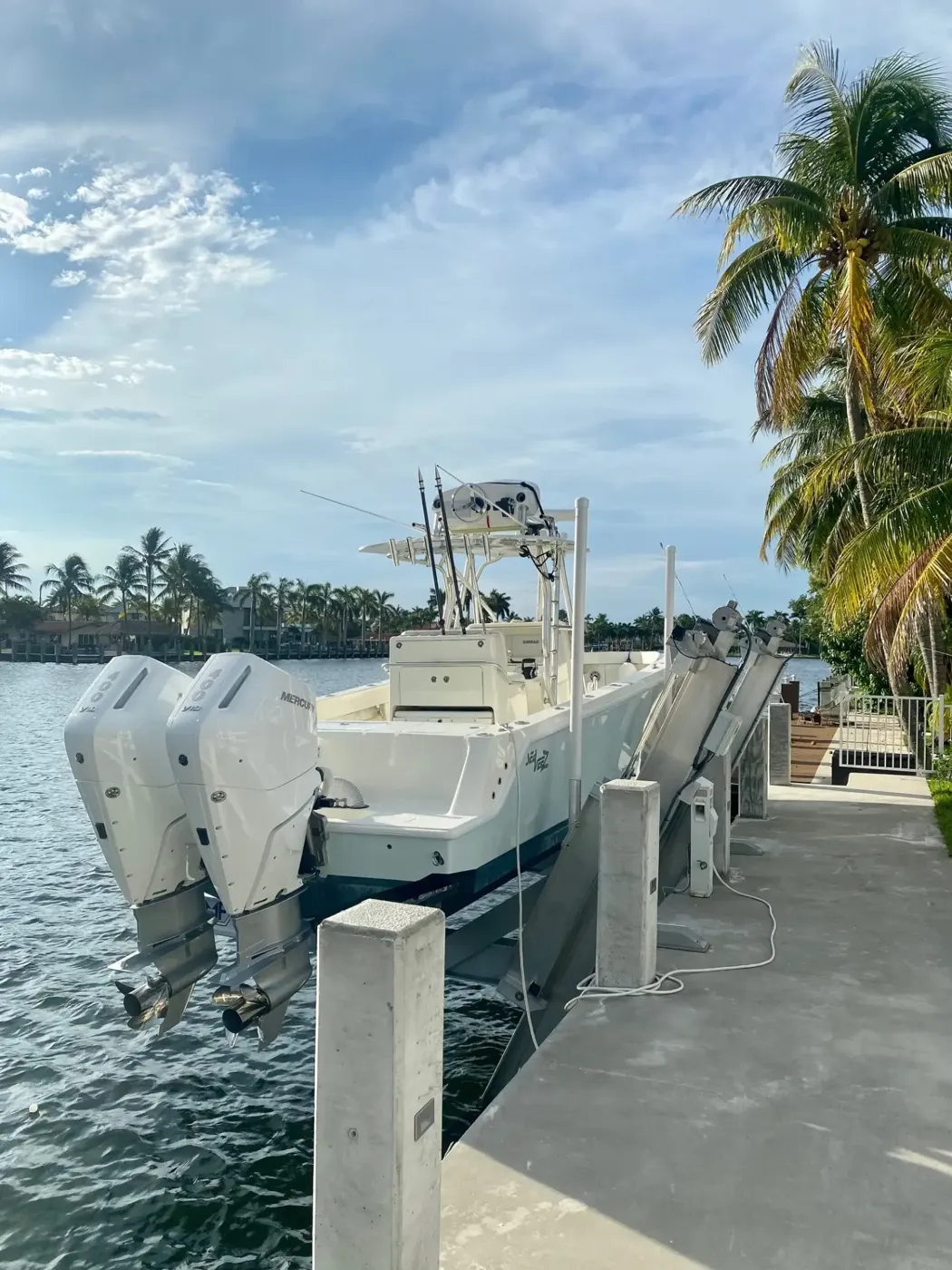
Shoreline Protection & Stabilization
Seawalls
A seawall is an engineered barrier that stabilizes the boundary between land and water. It must resist hydrostatic pressure, manage erosion forces, and maintain structural continuity across the full length of the shoreline.
Key Considerations
- Soil composition and groundwater behavior determine wall type, depth, and drainage requirements
- Erosion patterns and wave exposure influence material thickness and reinforcement strategy
- Adjacent structures, landscaping, and utilities must be accounted for during planning to avoid future conflicts
Performance & Longevity
Shoreline protection is a long-term commitment. We engineer seawalls to manage the cumulative forces that degrade lesser structures — settling, root intrusion, tidal cycling, and storm surge — with systems designed to perform across their full service life.
Learn More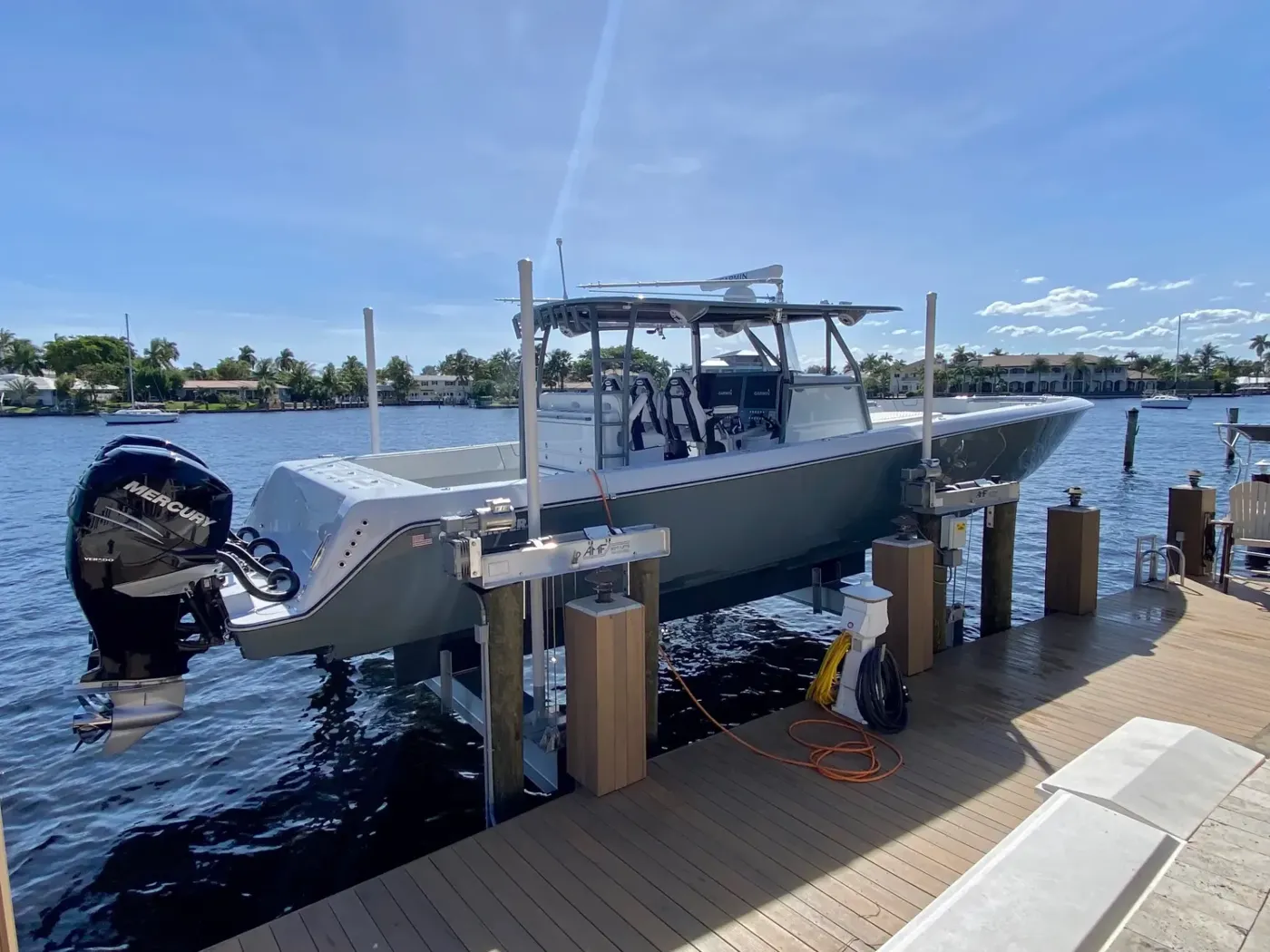
Vessel-Specific Lift Systems
Boat Lifts
A boat lift protects a vessel by keeping it above the waterline when not in use. Proper installation requires precise alignment with the dock structure, accurate capacity planning, and reliable mechanical systems.
Key Considerations
- Lift capacity must accommodate current vessel weight and anticipated future requirements
- Positioning relative to the dock, water depth, and bottom conditions affects structural load and accessibility
- Mechanical and electrical systems are selected for proven reliability and ease of long-term maintenance
Performance & Longevity
A well-installed lift system reduces hull maintenance, protects against storm damage, and simplifies daily access. We plan each installation around the specific vessel and site conditions to ensure dependable, low-maintenance operation for years.
Learn MoreApproach
A Disciplined Approach to Marine Construction
Marine structures operate under continuous environmental stress — salt exposure, tidal cycling, wave action, and shifting bottom conditions. Building well in this environment requires more than material selection. It requires planning that accounts for how forces interact over time and how structures age under sustained coastal conditions.
Every project we undertake begins with a thorough assessment of site-specific conditions. This informs structural decisions, material choices, and construction sequencing — ensuring that each element is designed to perform as part of a coherent, long-term system.
Integrated Planning
Disciplines That Work Together
Most waterfront projects involve more than one discipline. A dock may require seawall reinforcement. A boat lift installation may influence dock layout and structural loading. Shoreline stabilization often precedes or accompanies new construction.
We plan these elements together from the outset — coordinating structural requirements, material compatibility, and construction sequencing so that each component supports the others. The result is a waterfront system that performs as a unified whole, not a collection of independent installations.
Let's Review Your Waterfront Project
Share your goals and we'll outline how our disciplines apply to your specific property.